


Production control
with unitop software
Control production in a transparent way – from master data to production progress
In production, orders, work plans, lists of materials, capacities, materials tools and external work steps must work together reliably. Technical drawings, certificates, variants, material requirements and quality standards must also be available in the relevant process context. In the metal industry, additional requirements often apply. These include material-related specifications, material quality requirements, dimensions, test values or obligations to provide proof. Even small deviations can lead to deadlines being missed, materials being unavailable or capacities not being efficiently utilised.
With unitop, you can control your production processes in an ERP context. The solution helps you systematically maintain production master data, plan production orders transparently and monitor production progress while keeping an eye on component availabilities. This creates a dependable foundation that makes production control more efficient – from the item, the work plan and the bill of materials for production to the actual production itself.
Making technology usable
Why integrated production control is important
Production companies use complex structures: items are produced in variants; lists of materials and work plans change; capacities are limited; materials need to be available and individual work steps are carried out in-house or by third parties. If information is maintained in isolation, ambiguities quickly arise: Which version is valid? What components are needed? Which work processes have already been completed? What areas lack capacities or materials?
Integrated production control helps you bring together these types of information for the process being performed, so they can be used for planning, implementation and feedback. Production orders can be prepared more effectively, production processes can be tracked more transparently and bottlenecks can be detected sooner. At the same time, your teams benefit from the fact that production data are not viewed in isolation, but in conjunction with ERP processes such as purchasing, warehousing, calculation, sales and financial accounting.
Innovating. Transforming. Succeeding.
Production control with unitop – the benefits for you
unitop allows you to combine key production information with the operational production processes in your organisation. This gives your teams a more effective overview of production master data, production orders, capacities, components, work production progress and tools.
Typical benefits:
Scope of services
Production control functions with unitop
From planning to feedback
Control production processes the integrated way
State-of-the-art production control doesn’t end once the production order is drawn up. The important thing is that relevant information continues to be available throughout the process: What components are needed? Which work processes are planned? What capacities are available? What tools will be used? And how far has the order already progressed?
unitop brings all of this information together in an ERP context. Production master data, production orders, components, capacities and tools can be used in connection with the individual process concerned. This provides a more detailed overview for production management, work preparation, procurement, warehouse and commercial areas.
Production control & product data management
Production control requires reliable product data. Production orders can only be planned and controlled reliably if the underlying product data – such as item characteristics, variants, technical drawings, certificates or quality-related information – are clear, up to date and available within the process.
Product configuration & production control
In the case of multiple-variant products, the product configuration can also play an important role. The product configurator in unitop helps you create parameterised items, lists of materials and work plans based on an individual configuration, thereby providing systematic support for the transition from sales, quotation and production.
Production control in the metal industry
In the metal industry, production processes are often closely linked to materials, dimensions, batches, serial numbers, technical drawings and certificates. For production control to be reliable, it is not only crucial which order is being produced, but also which product-related information, evidence and documents need to be available during the process.
By combining product data management, drawing management and certificate management, unitop can make production and quality information more usable in an ERP context.
For complex production processes
Production control for complex manufacturing processes
Manufacturing companies frequently face the challenge of combining individual customer requirements, variants, internal capacities and material availabilities in a reliable way.
In the metal industry, product-related information, such as technical drawings, material certificates, test values or certificates, plays an important role.
Not having this information to hand during the process leads to queries, searches and a need for coordination between work preparation, production, procurement, the warehouse and quality assurance.
For this reason, production control should not be viewed in isolation, but in conjunction with product data, tools, material availability and quality information.
unitop is based on Microsoft Dynamics 365 Business Central and expands the platform by adding sector-specific functions for production, product data management and related ERP processes. This way, you can bring production-related and commercial processes together in an integrated solution.
Driving your digital transformation
Production control for industrial companies
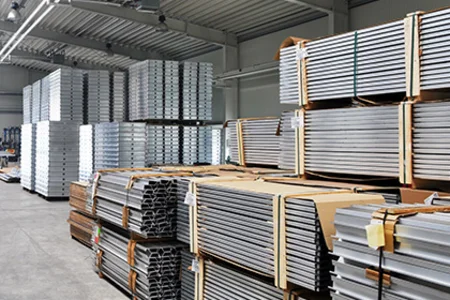
Metal industry
In the metal industry, unitop helps users view processes in the ERP system from end to end, from procurement, production, pre-machining and storage to delivery. Amongst other things, this involves requirements concerning materials, batches, certificates, technical drawings and quality assurance.
View solutions
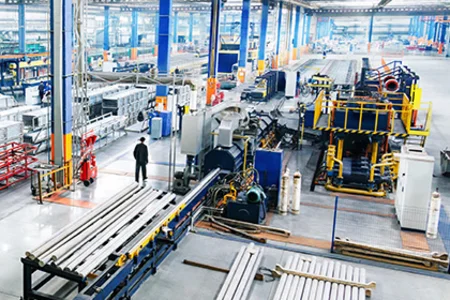
Manufacturing industry
For production companies, unitop brings together sales, planning, production, quality assurance, logistics, service and finances on a single platform. The solution is targeted at mechanical engineering, contract manufacturing, series production and variant manufacturing companies, amongst others.
View solutions
Selection criteria
What should you look for when selecting production control software?
Which solution is suitable will depend on the type of production, the complexity of the product, the number of variants involved, the capacity structure and the IT landscape present. The important thing is that the software not only manages production orders, but provides transparent support during the production process itself.
Your contact
Let’s talk about your production processes
Looking to control your manufacturing processes more transparently, use production master data more effectively and detect bottlenecks sooner?
If so, we’ll be happy to show you how unitop can support your production control in conjunction with ERP, warehouse, procurement, product data and commercial processes.

Frequently asked questions about production control using unitop
What do we understand by production control?
Production control consists of the operational control of active production. Amongst other things, this includes production orders, work processes, capacities, material availability, feedback and monitoring production progress.
How does unitop help with regard to production control?
unitop assists manufacturing processes by providing functions for work plans, production BOMs, production scenarios, production processes, production progress, component availability and tool management.
Can unitop take production capacities into account?
Yes. In unitop, shifts, public holidays and absences can be taken into account in workplace group calendars. Absence management will help you reconcile capacity planning and staff absences more effectively.
What role does tool management play in production?
Tool management helps identify tools, locate them, link them to work plans and maintain an overview of planned deployments of tools and maintenance information.
How are production control and data management inter-related?
Production control requires reliable product data. Item characteristics, variants, drawings, certificates and quality information can be essential for planning, production, procurement and sales.
Is unitop also suitable for production in the metal industry?
unitop can support production processes in the metal industry, especially where production control, product data, technical drawings, certificates, tools, contract manufacturing and quality information come together. What version is relevant in a specific project will depend on the products, manufacturing processes and certification requirements in each case.
What is the difference between production planning and production control?
Production planning prepares production processes, whilst production control coordinates and monitors the operational implementation of active production orders.